

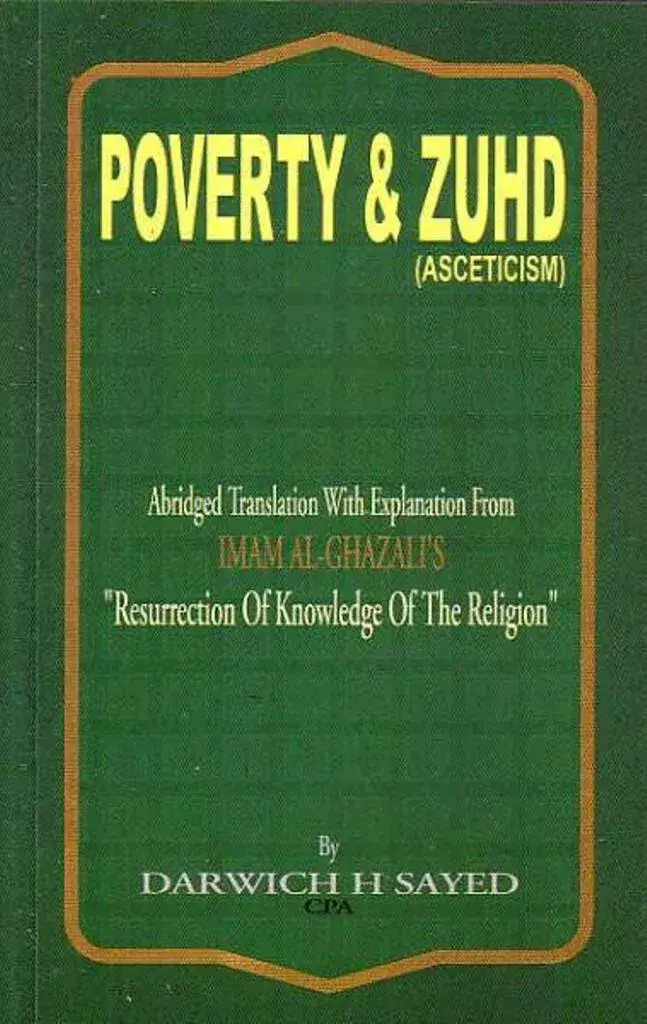
Poverty and Zuhd ( Iman Al-Ghazalis)
Poverty and Zuhd by Imam Al-Ghazali is a profound spiritual work that explores the Islamic understanding of asceticism (zuhd) and poverty (faqr) as paths to sincerity, humility, and closeness to Allah.
The book explains that zuhd does not mean rejecting wealth outright, but rather freeing the heart from attachment to worldly possessions. True poverty, according to Al-Ghazali, is not the absence of wealth, but the absence of dependence on it. A person may own much, yet remain spiritually poor before Allah; another may own little, yet be rich in contentment and trust (tawakkul).
Imam Al-Ghazali carefully distinguishes between:
-
Outward poverty and inner detachment
-
Permissible wealth and spiritual excess
-
Reliance on Allah versus reliance on material means
The book draws heavily on:
-
Qur’anic verses
-
Authentic hadith
-
Sayings and lives of the Prophets
-
Examples from the Sahaba and early righteous Muslims (Salaf)
A central theme is that love of the dunya weakens faith, hardens the heart, and distracts from the hereafter, while zuhd purifies intention, strengthens sincerity (ikhlas), and nurtures humility. Al-Ghazali also warns against false asceticism, where zuhd becomes a source of pride rather than submission to Allah.
Spiritually, the book aims to:
-
Cultivate contentment (qana‘ah)
-
Encourage gratitude and patience
-
Teach balance between worldly responsibility and spiritual focus
-
Prepare the believer for the Akhirah
Poverty and Zuhd is not a call to abandon work or society, but a call to discipline the heart, live responsibly, and keep the akhirah as the ultimate priority. It remains one of the most influential Islamic texts on spirituality, self-purification (tazkiyah), and inner reform.
| Sprog | Engelsk |
| Sider | 101 |
| Forlag | Millat book center |
| Forfatter | Darwich H Sayed |
| Indbinding | Indbundet |
Der er endnu ikke nogen anmeldelser her. Vi vil være glade for hvis du vil anmelde som den første.


