

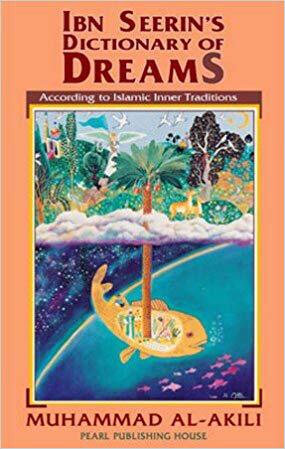
Ibns Seerin's Dictionary of Dreams
Basic Information
Title: Ibn Sīrīn’s Dictionary of Dreams: According to Islamic Inner Traditions
Attributed Author: Ibn Sīrīn (Muḥammad ibn Sīrīn, d. 110 AH / 728 CE)
Translator / Editor (modern English edition): Muhammad M. Al-Akili
Language: English translation from Arabic
Length: Around 550 pages
Purpose and Scope
The book is a dictionary-style guide to interpreting dreams according to classical Islamic tradition. It compiles symbols, meanings, and interpretations rooted in early Muslim scholarship and spirituality.
It is not a psychological manual but a spiritual and symbolic reference, showing how dreams were understood as possible reflections of divine messages, inner states, or moral guidance.
Structure and Features
-
The introduction discusses the nature of dreams in Islam, the etiquette of interpreting them, and the categories of dreams: true dreams, false or deceptive dreams, and those arising from one’s thoughts.
-
The main body forms a dictionary of symbols — thousands of entries covering objects, animals, people, actions, and natural phenomena.
-
Each entry gives one or more possible meanings, often depending on the dreamer’s personal circumstances or level of piety.
-
The book also explains principles of interpretation, such as contrast (interpreting by opposites) and analogy (linking the dream symbol to a Qur’anic or prophetic meaning).
Significance
Ibn Sīrīn is one of the earliest and most famous names in Islamic dream interpretation. His reputation for wisdom and piety made him a central authority in the science of dreams (taʿbīr al-ruʾyā).
This dictionary remains a standard reference for Muslims who wish to understand the spiritual and moral dimensions of their dreams. It presents the traditional belief that dreams may contain guidance, warnings, or reflections of one’s soul and deeds, provided they are interpreted with sincerity and knowledge.
Reliability and Historical Context
Modern scholars note that the surviving “Dictionary of Dreams” is probably a later compilation of material attributed to Ibn Sīrīn and other early interpreters.
Nonetheless, it preserves the classical Islamic symbolic system, shaped by centuries of scholarship.
Dream interpretation in Islam is not absolute: meanings depend on the dreamer’s context, personality, and intention. The book itself cautions that one must use discernment, consult knowledgeable interpreters, and recognize that not all dreams carry spiritual significance.
Practical Use
Readers use the dictionary by identifying a main symbol from their dream — for example, water, light, animals, or colors — and reading possible meanings.
The book encourages reflection rather than rigid application, reminding that dream meaning is personal and should lead to self-examination, repentance, or gratitude.
For students of Islamic spirituality, the book also reveals how classical scholars linked the unseen world to the moral and psychological life of the believer.
Summary
Ibn Sīrīn’s Dictionary of Dreams is a comprehensive manual of traditional Islamic dream symbolism.
It offers insight into how early Muslims understood dreams as part of divine communication and spiritual introspection.
Although not all entries can be traced directly to Ibn Sīrīn himself, the book endures as a respected reference combining religious wisdom, symbolism, and cultural heritage.
| Sprog | Engelsk |
| Sider | 560 |
| Forlag | Islamic Book Club under license from Pearl Publishing House |
| Forfatter | Muhammad Ibn Sirin |
| ISBN | 9781879405035 |
| Indbinding | Paperback |
Der er endnu ikke nogen anmeldelser her. Vi vil være glade for hvis du vil anmelde som den første.


