

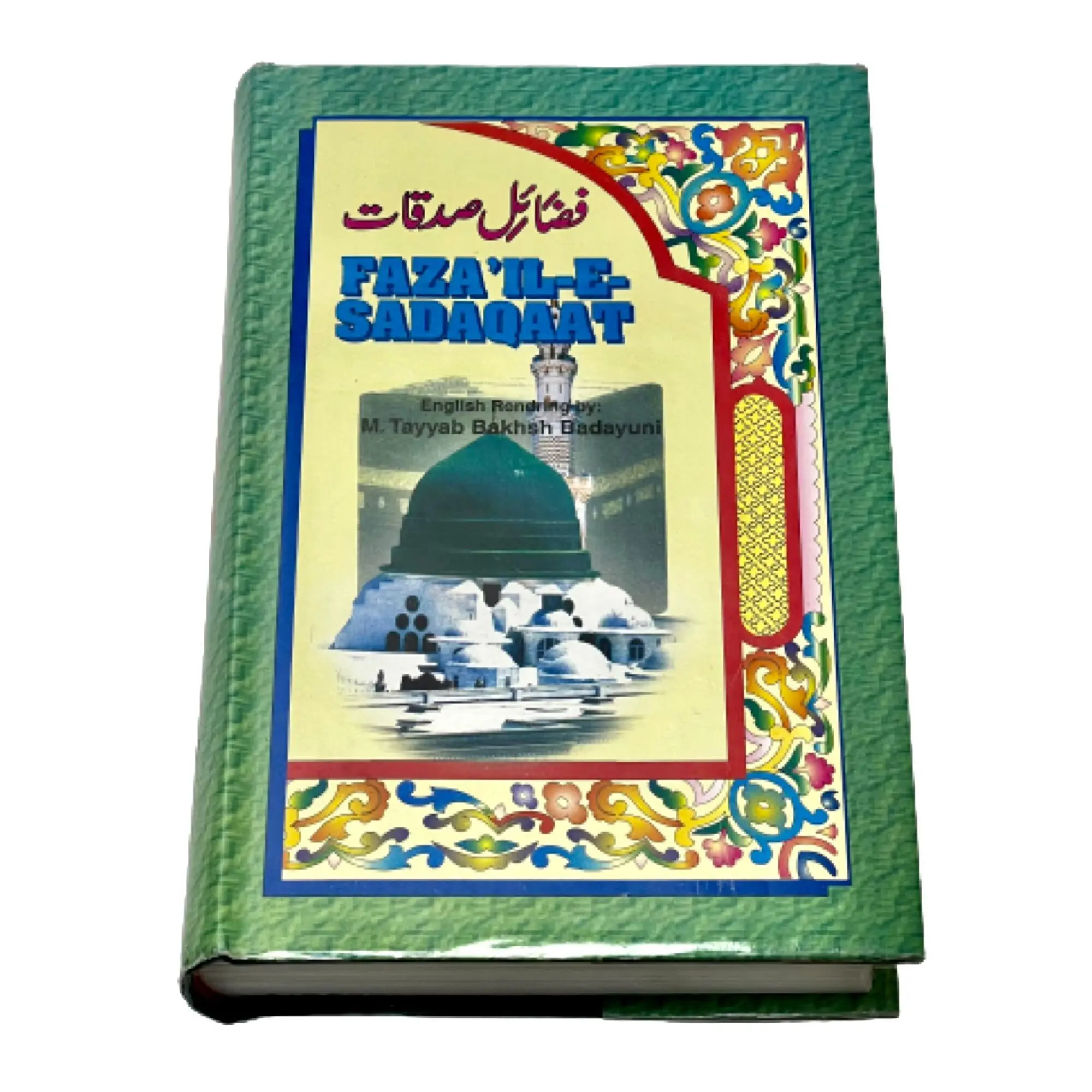
Faza'il E Sadaqaat (Virtues of Charity)
Faza’il-e-Sadaqaat (Virtues of Charity) by Shaikhul Hadith Maulana Muhammad Zakariyya Kandhalwi (RA) — one of the most well-known works in the Tablighi Jamaat and among Urdu-speaking Muslims worldwide.
Book Overview
-
Full Title: Faza’il-e-Sadaqaat (Virtues of Charity)
-
Author: Shaikhul Hadith Maulana Muhammad Zakariyya Kandhalwi (1898–1982)
-
Original Language: Urdu
-
English Translation: Virtues of Charity (sometimes also titled The Virtues of Giving and Charity)
-
Part of Series: Faza’il-e-A‘maal (Virtues of Good Deeds) – a two-volume compilation that also includes Faza’il-e-Dhikr, Faza’il-e-Qur’an, Faza’il-e-Namaz, etc.
Purpose and Central Theme
The book’s primary goal is to inspire Muslims toward generosity, compassion, and selfless charity (sadaqah).
It explains not only the religious obligation of zakat (compulsory almsgiving) but also the spiritual, moral, and social rewards of voluntary charity.
Maulana Zakariyya’s approach blends Qur’anic verses, hadiths (Prophetic sayings), and stories of the early Muslims (Sahabah) to create emotional and spiritual motivation for giving.
Main Topics and Structure
The book is divided into several thematic sections, including:
-
The Virtues of Charity and Generosity
-
Qur’anic promises for those who give in the way of Allah.
-
Analogies of charity as investment with divine returns.
-
Warnings against miserliness and attachment to wealth.
-
-
The Spirit of Sadaqah
-
The intention behind giving — sincerity, humility, and compassion.
-
How even small acts of kindness count as charity (smiling at someone, removing harm from the road, helping others).
-
-
Examples from the Prophet ﷺ and His Companions
-
Narratives showing how the Prophet Muhammad (peace be upon him) and his companions prioritized others’ needs over their own.
-
Stories of extreme generosity — such as giving away all one’s possessions or feeding others while fasting.
-
-
Zakat and Social Responsibility
-
Explanation of zakat as both spiritual purification and social reform.
-
How proper distribution helps eliminate poverty and build brotherhood.
-
-
Hidden Charity and Its Rewards
-
The importance of giving secretly for the sake of Allah alone.
-
The hadith about the seven people shaded by Allah’s throne — including “the one who gives charity so secretly that his left hand does not know what his right hand gives.”
-
-
The Dangers of Greed and Worldly Attachment
-
Moral warnings against hoarding wealth and neglecting the needy.
-
Reflections on how attachment to material comfort hardens the heart.
-
-
Charity Beyond Wealth
-
Emphasis on non-monetary forms of giving: kindness, service, guidance, and forgiveness.
-
Style and Tone
-
Didactic and devotional: written to move the heart, not to provide legal rulings.
-
Heavily based on authentic hadith and classical sources.
-
Storytelling style: includes anecdotes that illustrate the transformative power of generosity.
-
Accessible: designed for ordinary Muslims, not just scholars.
Significance and Impact
-
Faza’il-e-Sadaqaat is widely read within the Tablighi Jamaat movement, often recited in gatherings (ijtima‘at) to encourage moral reform and spiritual upliftment.
-
It is considered a spiritual companion to Faza’il-e-A‘maal, one of the most influential Islamic books of the 20th century.
-
The work has been translated into multiple languages — English, Arabic, Bengali, Malay, French — and remains in continuous print.
⚖️ Criticism and Scholarly Notes
-
While respected among traditional Sunni circles, some modern scholars have noted that certain stories in Faza’il-e-A‘maal (including those in Faza’il-e-Sadaqaat) rely on weak or non-verified hadiths, used for motivational rather than jurisprudential purposes.
-
The author himself acknowledged this and clarified that such narrations are acceptable in matters of virtue and exhortation, not in deriving legal rulings.
Takeaway
Faza’il-e-Sadaqaat is a spiritual manual on generosity — emphasizing that charity purifies wealth, heals hearts, and draws one nearer to Allah.
It presents giving as both an act of love and a means of self-purification, encouraging believers to see wealth as a trust, not ownership.
Der er endnu ikke nogen anmeldelser her. Vi vil være glade for hvis du vil anmelde som den første.


