

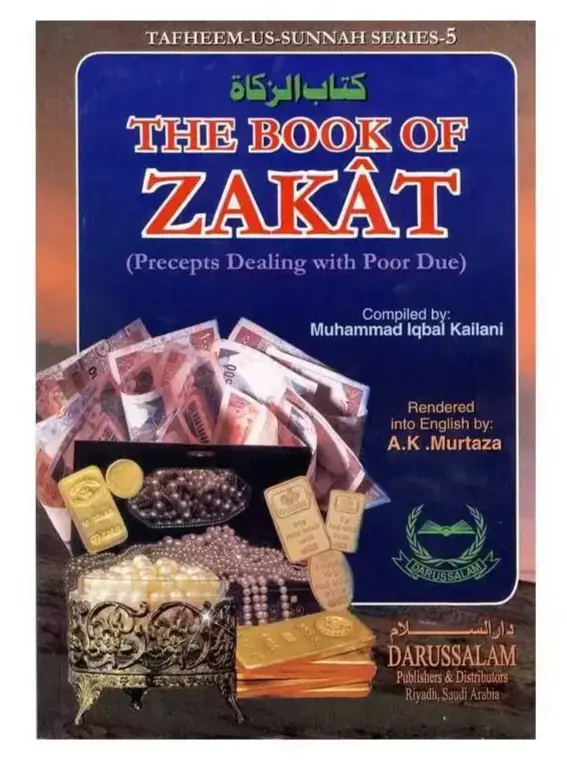


The Book of Zakat
by Muhammad Iqbal Kailani
The Book of Zakat af Shaykh Muhammad Iqbal Kailani er en kort guide til zakat – den årlige pligtige almisse og en af islams fem søjler.
Bogen er på engelsk.
In English
The Book of Zakat by Shaykh Muhammad Iqbal Kailani (Kelani) is a concise guide to one of the five pillars of Islam: Zakat, the obligatory annual charity due on eligible wealth. The book compiles Qur'anic verses and authentic Hadith on the subject and explains both the spiritual significance and the practical rules for fulfilling this act of worship.
Overview
Written in a clear and accessible style, the book aims to help Muslims understand:
- The importance of Zakat as an act of worship.
- Who is obligated to pay it.
- How it should be calculated.
- Who is entitled to receive it.
- The consequences of neglecting this obligation.
Rather than focusing on theoretical discussions, the author emphasizes authentic textual evidence and practical guidance rooted in the Qur'an and Sunnah.
Key Themes
1. The Purpose of Zakat
The book explains that the word zakat literally means purification and growth. Paying Zakat purifies a Muslim's wealth and soul while promoting social justice by supporting those in need.
2. Who Must Pay Zakat
Muhammad Iqbal Kailani outlines the conditions that make Zakat obligatory, including:
- Ownership of wealth above the nisab (minimum threshold).
- Completion of one lunar year (hawl) for applicable assets.
- Types of wealth subject to Zakat, such as:
- Gold and silver
- Cash and savings
- Business inventory
- Agricultural produce (where applicable)
- Livestock according to Islamic law.
3. Calculating Zakat
A major strength of the book is its practical approach. It provides step-by-step explanations of how to calculate Zakat on different forms of wealth, making it especially useful for readers who want to apply the rulings correctly in everyday life.
4. Eligible Recipients
The author discusses the categories of people who may receive Zakat, based on Qur'an 9:60, explaining the purpose of distributing wealth to support the poor, needy, debtors, travelers, and other eligible recipients recognized in Islamic law.
5. Authentic Evidence
Throughout the book, rulings are supported with references from the Qur'an and authentic Hadith. This reflects the author's objective of presenting Zakat according to primary Islamic sources rather than relying mainly on later commentary.
Style
The book is:
- Concise (approximately 96–97 pages in most editions).
- Easy to understand.
- Organized by topic.
- Practical rather than academic.
- Suitable for both beginners and readers looking for a reliable reference on Zakat.
Intended Audience
The book is particularly valuable for:
- Muslims learning how to calculate and pay Zakat correctly.
- Students of Islamic jurisprudence (fiqh) seeking an introductory text.
- Imams and teachers looking for a straightforward teaching resource.
- Anyone wanting an evidence-based guide to Zakat grounded in the Qur'an and authentic Hadith.
Overall
The Book of Zakat by Muhammad Iqbal Kailani is a practical handbook that combines the spiritual principles and legal rulings of Zakat in a clear, accessible format. By presenting authentic Islamic sources alongside practical examples, it helps readers understand not only how to fulfill this important obligation, but also why Zakat plays such a central role in Islam as a means of worship, purification, and social responsibility.
Der er endnu ikke nogen anmeldelser her. Vi vil være glade for hvis du vil anmelde som den første.


