

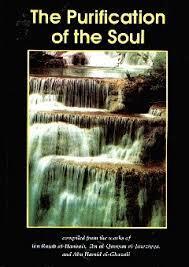
The Purification of The Soul
Basic Information
Full Title: The Purification of the Soul (Arabic: Jāmi‘ al-‘Ulūm wa’l-Hikam — selected sections on tazkiyah)
Author: Imam Ibn Rajab al-Hanbali (1335–1393 CE / 736–795 AH)
Language: Originally Arabic
English Publisher: Several English editions, notably from Dar as-Sunnah and Darussalam
Genre: Islamic spirituality (tazkiyah al-nafs) and moral reform (akhlaq)
About the Author
Ibn Rajab al-Hanbali was one of the foremost scholars of the Hanbali school and a student of the great Ibn Qayyim al-Jawziyya.
He was a master of hadith, jurisprudence, and spiritual insight — combining deep scholarly rigor with gentle moral instruction.
His works are known for their sincerity, simplicity, and emphasis on living knowledge through piety and humility.
Purpose of the Book
The book focuses on the purification and reform of the human soul (tazkiyah al-nafs) — an essential concept in Islam.
Its goal is to explain:
-
How one can cleanse the heart from spiritual diseases such as pride, envy, hypocrisy, and arrogance.
-
How to develop virtues like sincerity, patience, humility, and reliance on Allah.
-
The path toward self-awareness and nearness to Allah through repentance, reflection, and good deeds.
The book is a concise yet powerful guide for anyone seeking to strengthen their inner faith and moral discipline.
Structure and Content
Different English editions of the book contain selected treatises from Ibn Rajab’s works, especially from Jāmi‘ al-‘Ulūm wa’l-Hikam (a commentary on forty hadiths).
Common topics and chapters include:
-
The Importance of Tazkiyah (Purification)
-
Explains that true success lies in purifying the heart from sin and ego, quoting the Qur’anic verse:
“He has succeeded who purifies it (the soul), and he has failed who corrupts it.” (91:9–10)
-
-
The Nature of the Soul
-
Describes the inner struggle between the nafs (lower self) and the heart (qalb).
-
Shows how the nafs inclines toward temptation while the heart seeks divine light.
-
-
Diseases of the Heart
-
Details moral and spiritual ailments such as:
-
Pride (kibr)
-
Envy (hasad)
-
Ostentation (riya’)
-
Love of fame or wealth
-
Anger and arrogance
-
-
Explains how these traits destroy sincerity and inner peace.
-
-
Remedies and Spiritual Training
-
Teaches self-accountability (muhasabah) and reflection (tafakkur).
-
Emphasizes consistent remembrance of Allah (dhikr), prayer, repentance, and charity.
-
Advises companionship of the righteous and avoidance of heedlessness.
-
-
The Signs of a Sound Heart
-
A pure heart is one that loves Allah and detaches from the world’s excesses.
-
Discusses humility, forgiveness, patience, and gratitude as marks of a purified soul.
-
-
Sincerity and Intention (Ikhlas and Niyyah)
-
Clarifies that no action is accepted without sincerity for Allah’s sake.
-
Explores the constant purification of one’s motives.
-
-
Love of Allah and Hope in His Mercy
-
Presents the balance between hope (raja’) and fear (khawf).
-
Encourages believers to love Allah more than the world and to trust His mercy while striving for His pleasure.
-
-
The Journey Toward Allah
-
Illustrates that spiritual purification is a continuous process, not a single event.
-
Ends with reminders of death, the afterlife, and meeting Allah with a clean heart.
-
Style and Approach
-
Deeply rooted in the Qur’an and Sunnah: Every concept is supported by scriptural evidence.
-
Gentle and reflective tone: Ibn Rajab teaches through moral reasoning, compassion, and heartfelt reminders rather than abstract philosophy.
-
Balanced and moderate: Avoids extremes of asceticism or legalism, emphasizing both outward practice and inward sincerity.
-
Timeless relevance: The advice applies universally, transcending the author’s era.
Central Message
-
The true measure of faith is not external ritual alone, but the state of one’s heart.
-
The believer’s greatest task is to purify the soul from arrogance and hypocrisy, and adorn it with sincerity, patience, gratitude, and humility.
-
Every act of worship — prayer, fasting, charity — is meant to train the heart, not just fulfill obligation.
-
A clean heart leads to peace with oneself, harmony with others, and closeness to Allah.
Significance
-
The Purification of the Soul is regarded as one of the finest concise introductions to Islamic spirituality from the classical era.
-
It represents the Hanbali spiritual tradition — combining knowledge, action, and humility.
-
Often used in modern tazkiyah study circles and spiritual self-development programs.
-
Serves as a bridge between early Sufi moral teachings and later orthodox scholars.
Strengths
-
Rich with Qur’anic and prophetic references.
-
Short yet profound; suitable for both scholars and lay readers.
-
Written by a scholar of impeccable credibility and spiritual depth.
-
Addresses real inner struggles faced by every believer.
Limitations
-
Classical in style — requires some explanation for beginners unfamiliar with older Arabic idioms.
-
It is not an exhaustive manual of tazkiyah but rather a concise selection of its most essential principles.
-
Readers may benefit from pairing it with other works by scholars such as Ibn al-Qayyim or Imam al-Ghazali for further depth.
Summary
The Purification of the Soul by Ibn Rajab al-Hanbali is a timeless guide to inner transformation. It teaches how to cleanse the heart of pride, envy, hypocrisy, and worldly attachment, and how to cultivate sincerity, humility, patience, and love for Allah.
It reminds the reader that true success is not in wealth or status, but in meeting Allah with a purified soul.
Deeply rooted in the Qur’an and Sunnah, it continues to inspire Muslims who seek to revive the light of faith within their hearts.
| Sprog | Engelsk |
| Sider | 121 |
| Forlag | Darul Qalam Beirut |
| Forfatter | Ibn Rajab al hanbali,Al-Ghazali,ibn Al Qayam al-jawzi |
| Indbinding | Indbundet |
Der er endnu ikke nogen anmeldelser her. Vi vil være glade for hvis du vil anmelde som den første.


